All camps

Majdanek

Majdanek

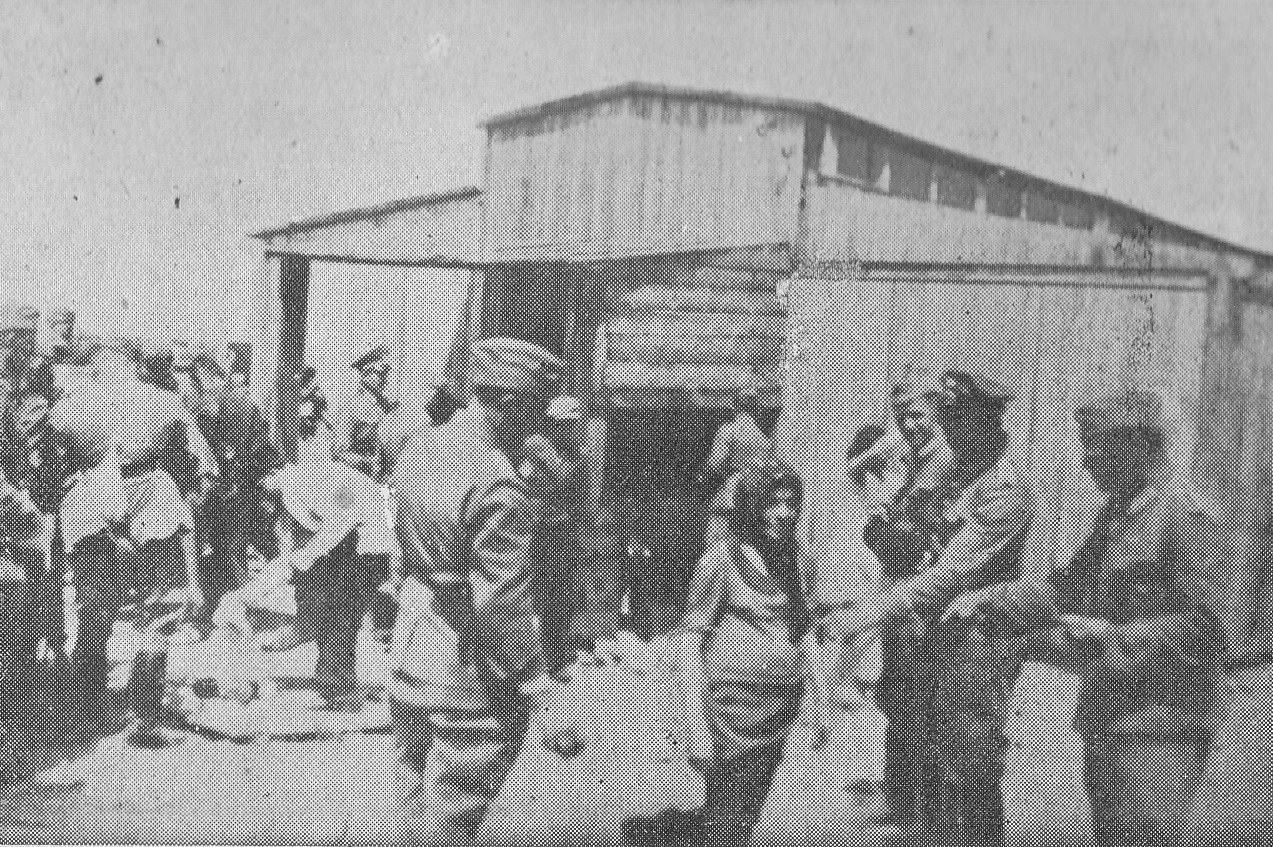
Newly arrived prisoners with their bundles outside a barracks at Majdanek.

Majdanek concentration camp. Public domain.

Type
Concentration camp and killing site
Location
Lublin (southeastern outskirts), Lublin District, German-occupied Poland
Operational dates
Construction began October 1941; operated December 1941 to 22-24 July 1944
Liberation
23-24 July 1944, by Soviet forcesCaptured almost intact, with fewer than 500 prisoners remaining; it was the first major camp to be liberated, the speed of the Soviet advance preventing its destruction.
Approximate prisoner count
Functioned primarily as a concentration and forced-labor camp through which a large but uncertain number passed; reliable cumulative totals are not firmly established
Approximate death toll
Between approximately 95,000 and 130,000 died in the Majdanek system, the majority of them JewsSubstantially revised: early postwar figures claimed up to 360,000; current Majdanek State Museum and USHMM research give this lower range. The single deadliest event was the 3 November 1943 'Erntefest' massacre, in which some 18,000 Jews were killed in one day.
Primary prisoner categories
Jews (the majority of prisoners and the overwhelming majority of the dead, including Slovak, German, Austrian, Czech, and Polish Jews, and Warsaw Jews in 1943) and non-Jewish Poles (including about 16,000 from the Zamość 'cleansing'), plus Soviet POWs and other nationalities.
Commandants
Karl-Otto Koch, the first commandant (1941 to 1942), was executed by an SS firing squad at Buchenwald on 5 April 1945 for corruption and the murder of witnesses, not for the murder of prisoners. (Later commandants included Max Koegel, Hermann Florstedt, and Martin Weiss; personnel were tried in Poland in 1944 and at the Düsseldorf Majdanek trial of 1975 to 1981.)

Majdanek stood on the southeastern edge of Lublin, in full view of the city, and it occupies an unusual place among the camps: conceived in 1941 as a vast forced-labor camp to supply construction materials for German settlement in the occupied east, it became deeply entangled in the murder of the Jews of the Lublin District under Operation Reinhard. Built initially by Soviet prisoners of war and later filled with Jews and non-Jewish Poles, it served as a holding camp, a labor camp, and at times a site of mass murder, with between roughly 78,000 and 130,000 people dying there. On 3 November 1943, in the 'Harvest Festival' action, the SS murdered some 18,000 Jews at the camp in a single day. Because the Soviet advance was so rapid in July 1944, Majdanek was captured almost intact, the first major camp to be liberated, and its preserved barracks and the mound of human ashes at its memorial made it one of the earliest physical proofs of the Nazi killing system shown to the world. (Many scholars formerly counted Majdanek as a sixth killing center; current USHMM research classifies it primarily as a concentration camp that nonetheless carried out mass murder.)
The people of Majdanek

Halina Birenbaum

born 1929

Survivor, author, and poet.

Halina Birenbaum was born in Warsaw in 1929 and lived through the German occupation in the Warsaw ghetto before being deported, as a young teenager, to Majdanek. From Majdanek she was sent on through Auschwitz, Ravensbrück, and Neustadt-Glewe, where she was liberated in 1945. In 1947 she emigrated to Israel and became a writer, poet, and translator who has devoted her life to Holocaust education. She became a writer, poet, and translator devoted to Holocaust education, and in 2001 received the 'Person of Reconciliation' award from the Polish Council of Christians and Jews.

Jerzy Kwiatkowski

1894 to 1980

Survivor and diarist.

Jerzy Kwiatkowski was born in Vienna on 8 June 1894 and was a Polish lawyer, entrepreneur, and factory manager living in Warsaw when the Germans arrested him on 18 February 1943. He was transferred to Majdanek on 25 March 1943 and registered as prisoner number 8830. He was among the last group moved out of Majdanek on 22 July 1944, ahead of the Soviet advance, and was sent on to Auschwitz and then Sachsenhausen before being liberated in Mecklenburg in May 1945. He recorded a detailed account of camp life, one of the most comprehensive prisoner records of Majdanek, written after the war.

Karl-Otto Koch

1897 to 1945

First SS commandant of Majdanek.

Karl-Otto Koch was the first commandant of Majdanek, having previously commanded Buchenwald, where he and his wife Ilse became notorious. He was tried not by Allied courts but by an SS court on charges of corruption, embezzlement, and the murder of witnesses to his crimes. He was convicted and executed by an SS firing squad at Buchenwald on 5 April 1945, days before that camp's liberation, put to death for offenses against the SS itself rather than for the murder of prisoners.

Odilo Globocnik

1904 to 1945

SS and Police Leader, Lublin.

Odilo Globocnik was the SS and Police Leader in the Lublin District and the official charged by Himmler with implementing Operation Reinhard, the plan to murder the Jews of the General Government. In that capacity he directed the Lublin-district killing apparatus, including Majdanek's role as a concentration, labor, and storage site within the operation, and oversaw the Trawniki training camp that supplied auxiliary guards. He was captured by British forces in Austria in late May 1945 and died by suicide shortly afterward.

Subcamps

Majdanek administered several subcamps and was tied into the wider Lublin-district camp network. They included the German Equipment Works (DAW) and Clothing Works (BKW) camps in Lublin, the Lublin Sportplatz and Standortverwaltung details, the Trawniki labor camp, the sawmill detail at Piaski, and the Chełm command, with the Radom, Bliżyn, Budzyn, and Warsaw labor camps grouped under the system at various times, and the Poniatowa, Kraśnik, and Puławy camps administered through it in autumn 1943. The Reinhard killing centers Belzec, Sobibor, and Treblinka were not Majdanek subcamps.

Researched and written by · Fortitude Research

Work with Erin

Tell me who
you are looking for.

Start the search About Erin