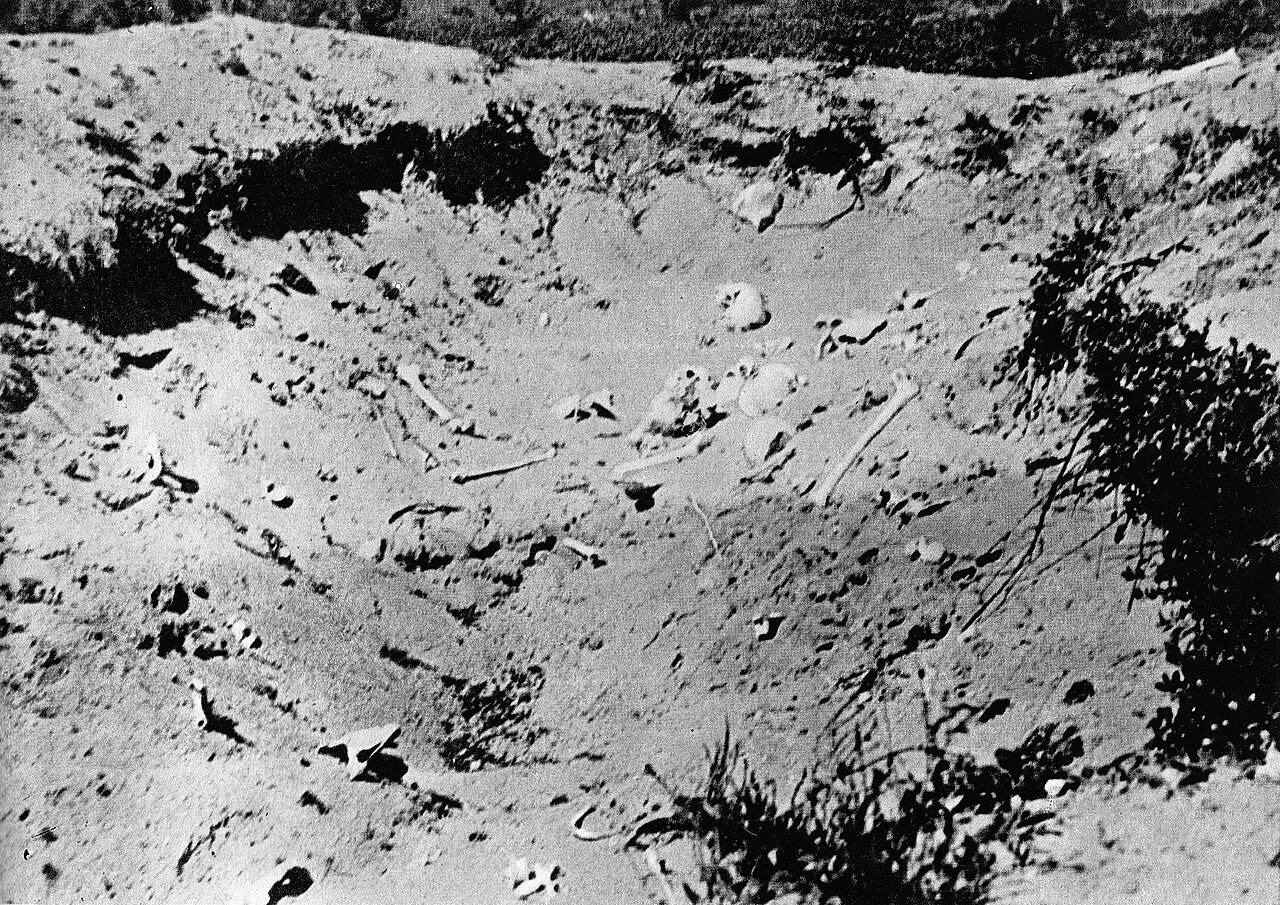
Treblinka was built in occupied Poland for one purpose, and for a little over a year it served that purpose on a scale second only to Auschwitz. It stood in a thinly populated, wooded area northeast of Warsaw, reached by a rail spur from the Małkinia junction, and it was operated by a small German staff of roughly 25 to 35, supported by Trawniki-trained auxiliary guards. As the third killing center of Operation Reinhard, after Belzec and Sobibor, it was designed chiefly to murder the Jews of the Warsaw and Radom districts, and an estimated 925,000 Jews died there along with unknown numbers of Poles, Roma, and Soviet prisoners of war. The site was elaborately camouflaged, with a fake railway station meant to deceive arriving deportees. On 2 August 1943, prisoners staged an armed revolt and burned much of the camp; in its aftermath the SS dismantled the site, ploughed it over, and installed a farmer to hide what had happened there.