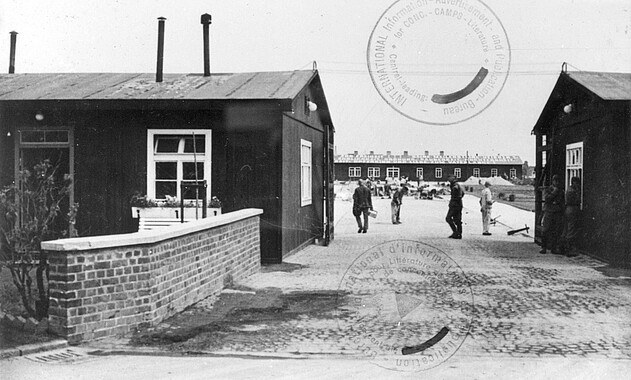
Neuengamme was established by the SS in December 1938 on the grounds of a disused brickworks in a suburb of Hamburg, first as a satellite of Sachsenhausen and from June 1940 as an independent concentration camp. Its prisoners came overwhelmingly from German-occupied Europe and were worked in the brickworks, in river and canal projects, in armaments plants, and in the perilous clearing of rubble and unexploded ordnance from bombed northern German cities. The camp became the hub of a large network of subcamps spread across northern and central Germany, with more than twenty in Hamburg alone. It was also a site of lethal medical experiments, most infamously the tuberculosis experiments on twenty Jewish children who were murdered at the Bullenhuser Damm school in April 1945. By war's end more than 50,000 of those imprisoned at Neuengamme had died.